

Ayam Prevailed in Opposition Against “Golden Roster” in Australia
4 September, 2025
Case Background
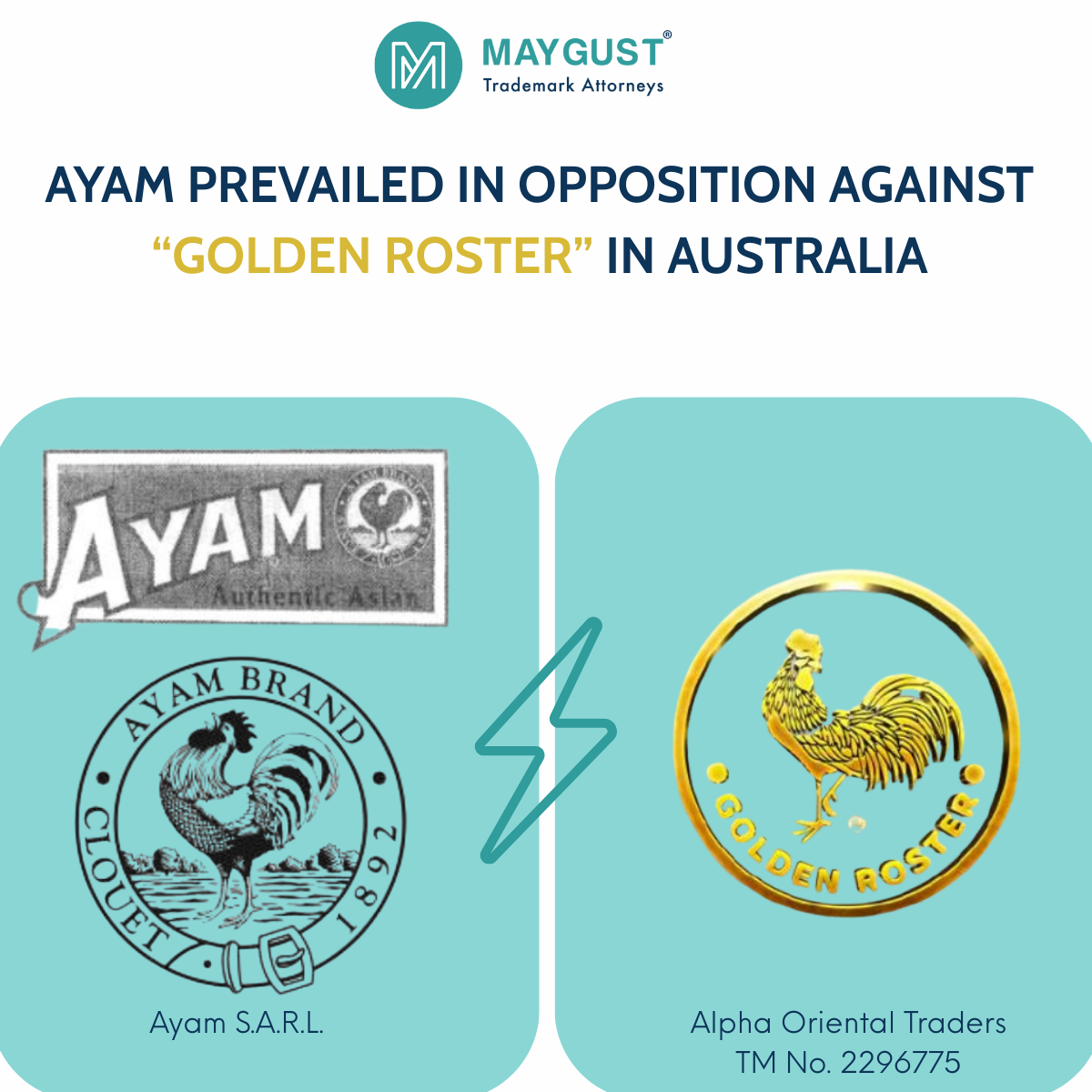
The application was filed by Alpha Oriental Traders Pty Ltd for goods in Classes 29, 30 and 32 (covering food and beverages). Ayam S.A.R.L., the owner of the iconic AYAM BRAND, opposed the application.
Ayam has been active in the Australian market since 1986. The company sells more than 60 million products annually across 30+ countries, making its rooster logo highly recognisable to Australian consumers.
The Key Issue – The Rooster Device
The central dispute concerned the rooster emblem.
-
Ayam relied on its longstanding use of a realistic, left-facing rooster device contained within a circular emblem, which has become a key brand identifier.
-
The applicant’s “Golden Roster” mark also featured a rooster device within an emblematic seal.
Ayam argued that these visual similarities, combined with its reputation, created a strong likelihood of confusion among consumers.
Arguments Presented
Opponent (Ayam):
-
Highlighted its strong reputation and market presence.
-
Emphasised the visual similarity between the rooster devices.
-
Noted the overlap in food-related goods, increasing the risk of consumer confusion.
Applicant (Alpha):
-
Argued that rooster logos are common in the food industry.
-
However, Alpha did not appear at the hearing to defend its application—weakening its position significantly.
The Decision
IP Australia accepted that Ayam’s rooster logo had acquired substantial reputation in Australia.
Given the similarities in device elements, the overlap in goods, and the way consumers purchase fast-moving consumer goods (FMCGs) with relatively little attention, the Hearing Officer concluded that the “Golden Roster” mark was likely to cause confusion.
The application was refused under Section 60 of the Trade Marks Act 1995 (Cth) – dealing with marks similar to trade marks that have acquired reputation in Australia.
Lessons Learned
-
Reputation Evidence is Key
Oppositions often turn on strong evidence of reputation. Sales data, advertising spend, and consumer recognition can decisively influence the outcome. -
Consumer Behaviour Matters
For FMCG products, small visual elements like logos are critical. Since consumers often buy quickly and with limited attention, even minor similarities can mislead. -
Device Elements Count in Australia
For overseas agents: Australian examiners and tribunals pay close attention to logos and imagery. If a device element resembles a reputed local brand, it may trigger a Section 60 objection. Careful clearance searches and strategy are essential.
Maygust’s Perspective
The Ayam case underscores the strength of reputation-based objections in Australia. Even when common motifs like animals are used, established brands enjoy significant protection.
For brand owners and their advisors, this decision highlights the importance of:
-
Conducting thorough clearance searches before filing.
-
Preparing robust evidence of reputation where relevant.
-
Considering consumer purchasing behaviour in real-world settings.
Remember: This information is for general guidance only and does not constitute legal advice. For specific situations and trademark-related queries, always seek professional legal counsel to ensure you comply with Australian trademark laws and protect your brand effectively.
Need assistance with your trademark registration? Whether you’re in Australia, New Zealand, or beyond, Maygust Trademark Attorneys are here to help. Don’t navigate the process alone – our qualified attorneys can guide you every step of the way.
Need some advice on this?
If you need some more advice in your particular case, we offer a free initial consultation


